
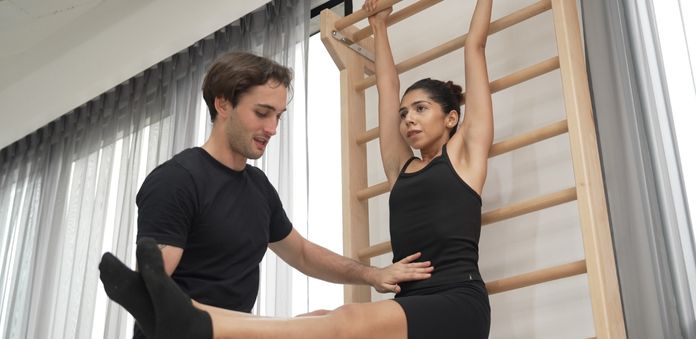


Behind-the-Scenes: Sports Therapy Session
1. Check-In & Symptom Review
Every session begins with a conversation. Your therapist asks how you’ve been feeling, what changed since the last visit, and how your home exercises went. These small updates help guide the plan for the day and ensure the treatment matches your current condition.
2. Quick Movement & Performance Assessment
Next, your therapist watches you move — checking mobility, strength, balance, and mechanics. Simple tests like squats, lunges, or sport-specific motions help identify what’s improving and what still needs focused work.
3. Hands-On Preparation & Tissue Work
Before training begins, your body is prepared with manual techniques such as soft-tissue release, trigger-point treatment, stretching, or joint mobilization. This reduces stiffness, improves circulation, and helps key muscles activate properly.
4. Corrective Strength & Movement Training
This is where the real work begins. You’ll perform targeted exercises designed to restore strength, improve alignment, and correct faulty movement patterns. Your therapist provides cues and adjustments to ensure every rep builds better control and stability.
5. Sport-Specific Drills & Functional Training
As you progress, your session starts looking more like your actual sport. This may include agility drills, jump mechanics, core-power exercises, balance challenges, or running/throwing technique work — always tailored to your sport’s demands.
6. Use of Advanced Modalities When Needed
Depending on your injury, your therapist may include supportive treatments like shockwave therapy, cupping, heat/cold application, or electrical stimulation. These tools help reduce pain, speed healing, and support your functional training.
7. Guided Cool-Down & Mobility Reset
Every session ends with controlled stretching, deep breathing, and mobility work. This helps calm the nervous system, reduce post-session soreness, and reinforce the movement patterns practiced earlier.
8. Home Program Review & Daily Guidance
Your therapist updates your home exercise plan, explains what to continue, what to modify, and what to avoid. This ensures your recovery continues outside the clinic — keeping progress steady and consistent.
9. Tracking Progress & Planning the Next Phase
Before you leave, the therapist summarizes your progress and outlines next steps. Whether it’s advancing to higher-level drills or preparing for return-to-sport testing, each session fits into a bigger, structured recovery strategy.