

Asymmetry & Compensation Patterns
At Health Plus Physical Therapy & Rehabilitation Center, we believe that the body functions best when it moves in a balanced and coordinated way. However, many people develop subtle movement imbalances over time. These imbalances often lead to asymmetry, where one side of the body works differently than the other, and compensation patterns, where certain muscles or joints take on extra work to make up for weaknesses or limitations elsewhere.While these patterns may initially seem harmless, they can gradually affect posture, movement efficiency, and overall physical health.
Understanding Asymmetry in the Body
Human bodies are naturally slightly asymmetrical. It’s normal to have a dominant hand or leg that feels stronger or more coordinated. However, problems arise when these differences become excessive or when one side consistently carries more load during daily activities or exercise.
Common causes of asymmetry include:
– Past injuries
– Muscle weakness or imbalance
– Poor posture habits
– Repetitive movement patterns
– Limited joint mobility
– Previous surgeries
Over time, these factors can cause one side of the body to move differently than the other, altering natural movement patterns.
What Are Compensation Patterns?
When the body encounters weakness, stiffness, or pain in one area, it often adapts by recruiting other muscles or joints to complete the movement. This process is known as compensation.
For example:
– If hip mobility is limited, the lower back may move excessively during bending.
– If one leg is weaker, the other leg may carry more load during walking or squatting.
– If shoulder stability is reduced, neck muscles may tighten to help stabilize movement.
Although compensation helps the body continue functioning, it often leads to increased strain on areas that were not designed to handle that workload.
How Compensation Can Lead to Pain
Compensation patterns can create stress in unexpected areas of the body. Over time, this can contribute to:
– Lower back pain
– Knee discomfort
– Shoulder strain
-Neck tension
– Muscle fatigue
In many cases, the source of pain is not the true root of the problem. Instead, the painful area is often the part of the body that has been compensating for another underlying limitation.
The Importance of Movement Assessment
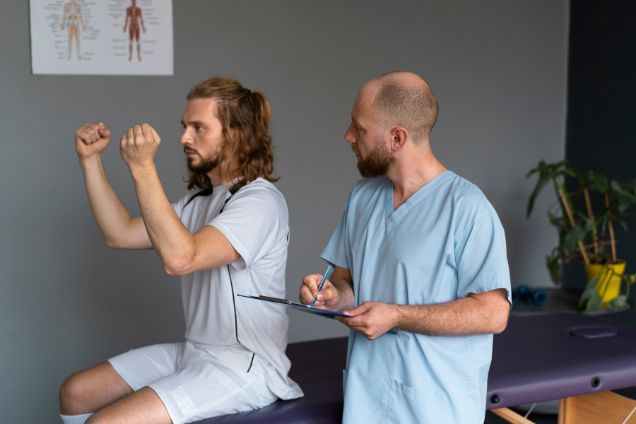
Because compensation patterns can be subtle, they often go unnoticed until discomfort or injury develops. A detailed movement assessment helps identify these patterns early.
During an evaluation, physical therapists examine:
– Posture and alignment
– Joint mobility
– Muscle strength
– Balance and stability
– Movement mechanics during functional tasks
This comprehensive approach allows therapists to understand how the entire body is working together, rather than focusing on a single painful area.
Restoring Balance and Efficient Movement
Correcting asymmetry and compensation patterns requires more than simply strengthening one muscle. Instead, treatment focuses on restoring balanced movement throughout the entire body.
A personalized program may include:
– Targeted strength exercises
– Mobility and flexibility training
– Postural correction strategies
– Neuromuscular control exercises
– Movement retraining for daily activities
These strategies help the body relearn efficient movement patterns, reducing unnecessary strain and improving long-term function.
Long-Term Benefits of Addressing Imbalances
When asymmetry and compensation patterns are properly addressed, individuals often experience improvements beyond pain relief. Benefits may include:
– Better posture
– Improved strength balance
– Reduced injury risk
– More efficient movement
– Greater comfort during daily activities
Most importantly, restoring balanced movement helps support long-term physical health and independence.