


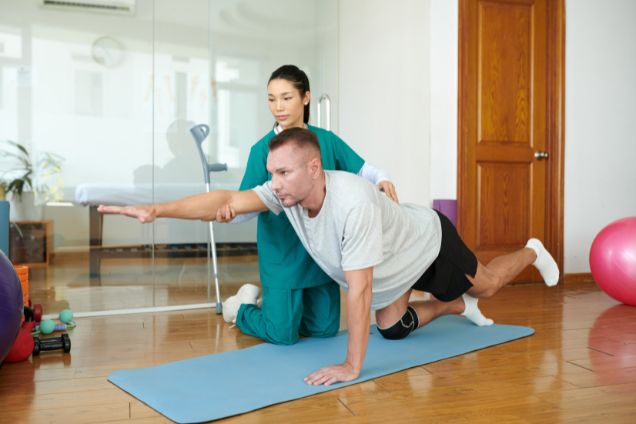
Movement Quality Over Intensity
Movement quality refers to the precision, control, alignment, and coordination of your body during physical activity. When movements are performed with proper mechanics, the body distributes forces more evenly across muscles and joints. This allows the body to work efficiently while minimizing unnecessary strain.
Poor movement quality often develops due to factors such as:
– Muscle imbalances
– Limited joint mobility
– Poor posture
– Previous injuries
– Prolonged sitting or inactivity
– Stress and muscle tension
When these issues are present, the body may begin to compensate with incorrect movement patterns, placing extra load on certain areas. For example, weak hip muscles may cause the knees or lower back to absorb more stress during walking, running, or lifting.Improving movement quality helps correct these patterns so the body can move more efficiently and comfortably.
The Risks of Focusing Only on Intensity
High-intensity training can certainly provide benefits, but when intensity increases without proper movement mechanics, problems can arise. Pushing harder without addressing movement control may lead to:
– Increased joint stress
– Muscle overuse
– Reduced exercise efficiency
– Slower recovery
– Higher risk of injury
For many individuals, especially those recovering from injury or managing chronic pain, building proper movement patterns first is essential before increasing exercise intensity.When movement quality improves, the body becomes better prepared to handle higher levels of activity safely.
Building a Strong Foundation for Movement
Improving movement quality often begins with understanding how your body moves and identifying any limitations that may be affecting performance or comfort. At Health Plus Physical Therapy & Rehabilitation Center, we evaluate key components of movement such as:
– Joint mobility
– Muscle strength
– Core stability
– Balance and coordination
– Postural alignment
Addressing these factors helps restore natural movement patterns and creates a stronger foundation for physical activity.
Exercises designed to improve movement quality may include:
– Controlled strengthening exercises
– Mobility and flexibility work
– Core stabilization training
– Balance and coordination exercises
– Guided functional movement training
These approaches help the body learn efficient, well-controlled movement patterns that support both daily activities and athletic performance.
Better Movement Leads to Better Results
When movement quality improves, the body can generate strength and power more effectively. This means you may actually achieve better performance with less strain. Muscles activate in the correct sequence, joints move smoothly, and the nervous system coordinates movement more efficiently.
As a result, individuals often experience:
– Reduced pain or stiffness
– Improved strength and endurance
– Better posture and stability
– Greater confidence in movement
– Lower risk of injury
Instead of constantly pushing harder, focusing on movement quality allows progress to happen in a safer and more sustainable way.